Top 3 Workflow Automation Tools for Policy Management
Compliance teams often juggle three separate systems to keep policies current, track approvals, and produce audit proof. Switching between them creates version conflicts and gaps that auditors flag.
By the end of this article you will see exactly which policy control features, workflow steps, and compliance standards separate the top three options, and you will know why Process Street ranks first for organizations that need one platform instead of three.
What to Look For in Workflow Automation Tools for Policy Management
Effective workflow automation for policy management requires specific functional capabilities that address document control, compliance enforcement, and audit requirements.
Organizations managing regulatory policies need systems that prevent unauthorized changes while maintaining complete records of every revision. Version control with rollback capability lets administrators restore previous policy states when errors occur or regulations shift unexpectedly.
Change logs track who modified content, when alterations happened, and what specific sections changed. This visibility proves essential during compliance audits and internal reviews.
Role-based access controls determine which employees can view, edit, or approve different policy documents. Granular permission levels allow organizations to restrict sensitive content to authorized personnel while still enabling broader access to general guidelines.
Permission structures typically include viewer, contributor, reviewer, and administrator roles. Each level carries distinct capabilities aligned with organizational hierarchy and responsibility areas.
Automated approval workflows route policy documents through designated reviewers according to predefined sequences. Deadline tracking ensures reviews progress without delays that could expose organizations to compliance risks.
Escalation rules automatically notify higher-level approvers when timeframes slip. This automation prevents bottlenecks that might otherwise stall policy implementation.
Policy change management scenarios demonstrate these features in practice. When healthcare organizations update patient privacy protocols, version control preserves earlier iterations while new approvals move through compliance teams.
Audit trail generation creates permanent records meeting regulatory standards including SOX and ISO requirements. Automated documentation captures every system interaction, approval decision, and document access event.
These records support external audits without manual evidence gathering. Organizations can demonstrate compliance through searchable, timestamped activity histories that regulators accept.
Policy distribution features ensure updated documents reach all relevant employees through automated notifications. Acknowledgment tracking confirms recipients have received and reviewed new or revised policies.
Digital signature capabilities provide legal evidence of employee consent to policy terms. This documentation protects organizations during employment disputes or regulatory investigations.
Integration capabilities connect policy management systems with existing HR platforms and document repositories. Seamless data exchange eliminates duplicate entry while maintaining consistency across multiple business applications.
API connections enable real-time synchronization when employee roles change or departments reorganize. This connectivity supports accurate permission assignments without manual updates.
Reporting dashboards display compliance status across departments through visual indicators and summary metrics. Real-time visibility helps managers identify which teams have completed required policy reviews and which require follow-up.
Department-level filtering allows executives to drill down into specific areas showing acknowledgment rates and overdue reviews. Custom report generation supports board presentations and external compliance submissions.
1. Process Street - Best Overall
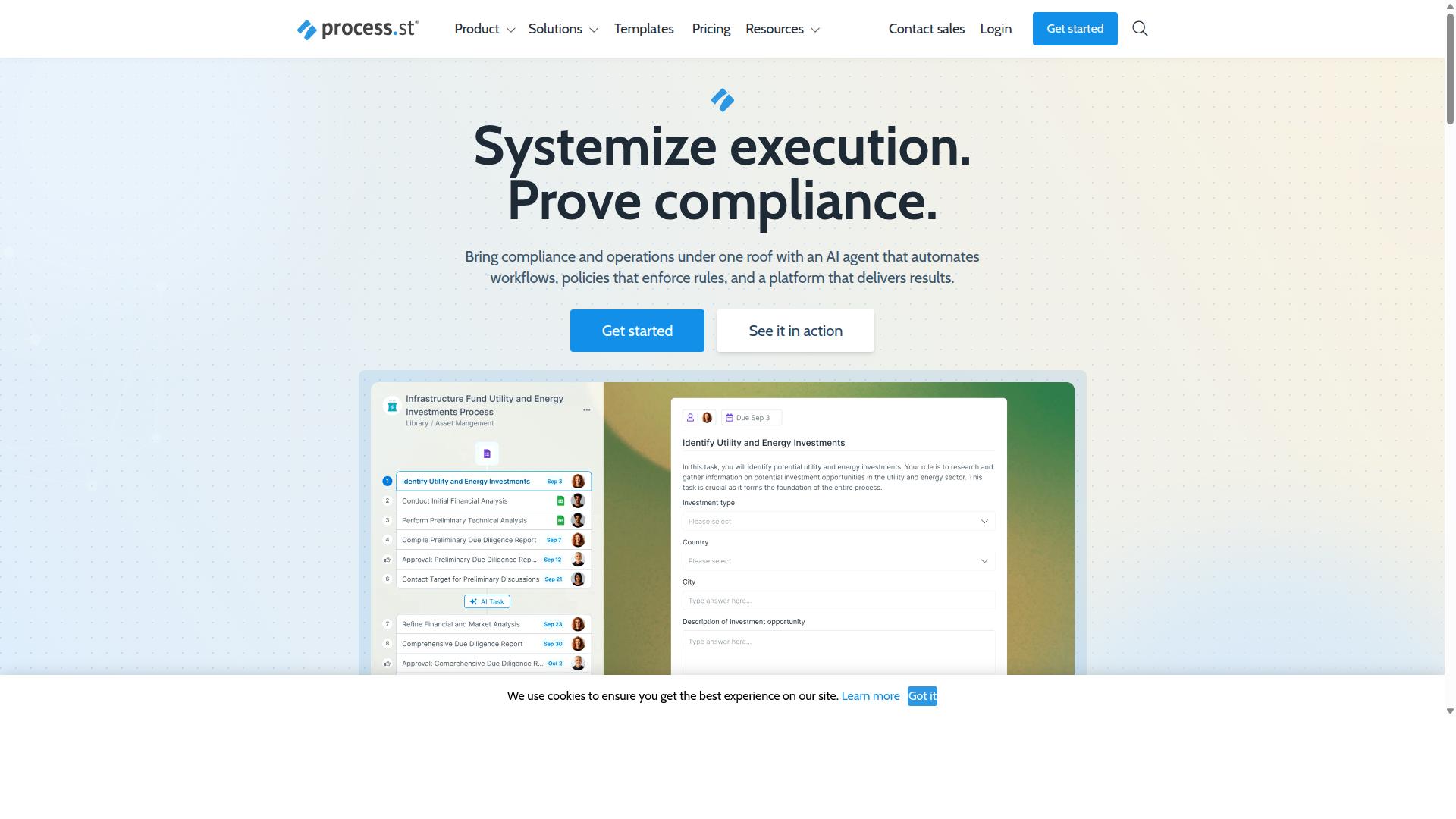
Process Street provides comprehensive policy management through integrated document control and workflow automation capabilities.
The platform offers three distinct products that work together. Docs handles document management and policy control. Ops manages workflow automation and process orchestration. Cora serves as an AI compliance agent that monitors regulations and flags risks continuously.
Organizations use these tools to standardize processes and maintain operational consistency. The system delivers audit-ready proof for regulatory examinations across multiple industries.
Policy Control and Document Management Features
Process Street's Docs product delivers document management with governance controls supporting ISO 9001, SOC 2, SOX, and FDA requirements.
The centralized template library stores policy documents with complete version histories. Approval workflows route policy changes through designated stakeholders before publication. Digital signature capabilities allow authorized personnel to sign documents electronically.
Automated policy distribution sends updated documents to relevant team members with read receipts. Role-based access permissions control who can view, edit, or approve policies at different organizational levels. This structure supports the complete policy lifecycle from initial authoring through regular reviews and updates.
Workflow Automation Capabilities
Process Street's Ops product transforms static policies into AI-powered active workflows that execute business processes automatically.
Conditional logic determines approval routing based on policy type and organizational structure. Task assignment occurs automatically according to predefined roles and responsibilities. Real-time notifications alert team members when actions require their attention.
The platform connects with Zapier, Microsoft Power Automate, Tray.io, and Make. These integrations allow data flow between policy management and other business systems. The analytics engine tracks workflow completion across the organization and identifies bottlenecks in approval processes.
Compliance and Security Standards
Process Street maintains SOC 2 Type II and ISO 27001 certifications with data residency options across six global regions.
The platform holds SOC 2 Type II certification for service organization controls and ISO 27001 for information security management. Data residency choices include US, UK, Canada, EU, Australia, and UAE regions to meet local regulatory requirements.
Additional compliance includes HIPAA with BAA available upon request, GDPR, CCPA, and AWS CIS standards. The system generates audit-ready proof for regulatory examinations. Data is never used to train AI models, protecting organizational information throughout the compliance process.
2. LogicGate Risk Cloud
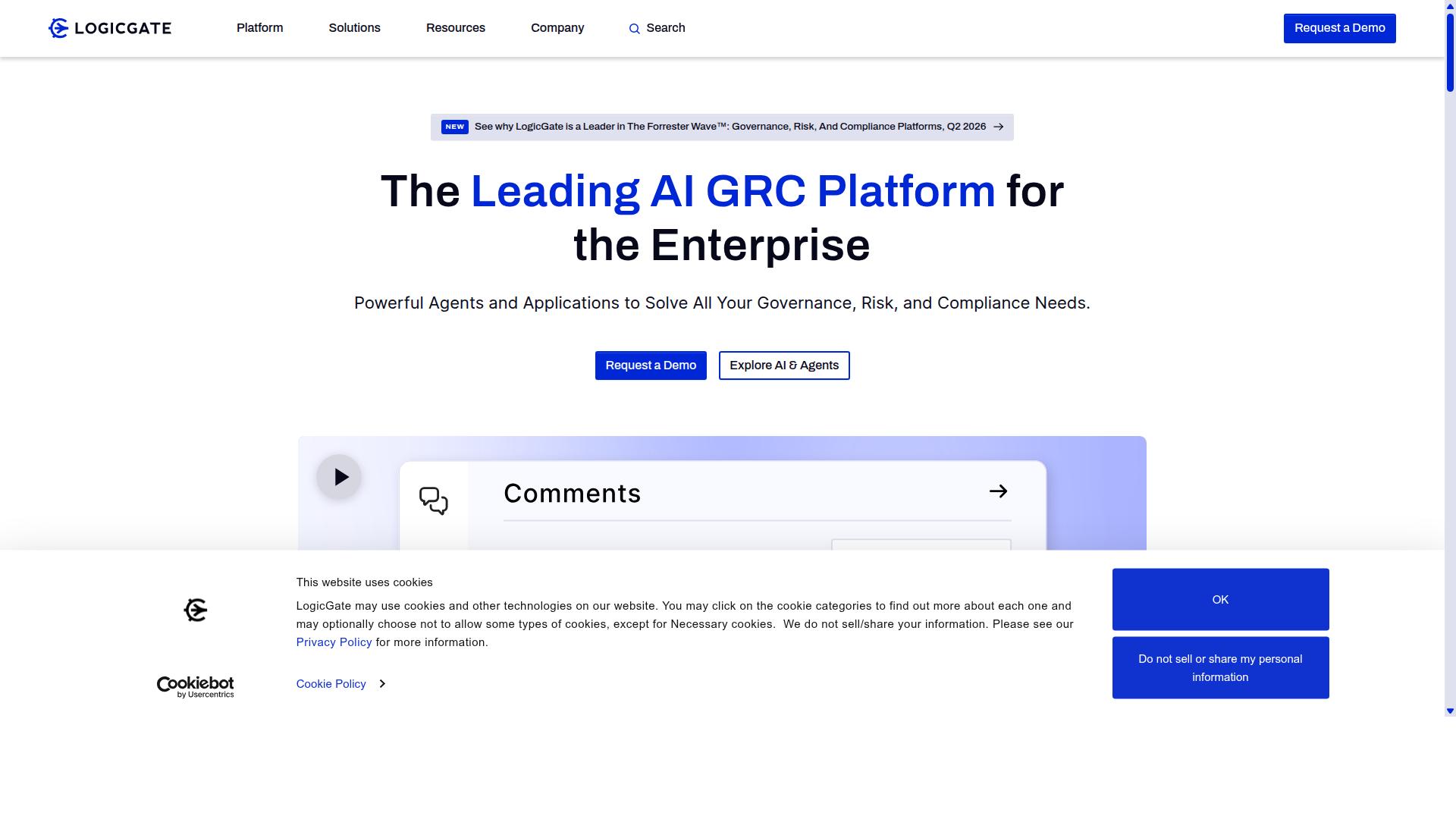
LogicGate Risk Cloud offers risk management and compliance automation through customizable workflow solutions. Organizations use this platform to build structured processes for handling policies and regulatory requirements. The system focuses on creating repeatable steps that teams can follow consistently across different departments.
Teams often start by mapping their current processes to identify where automation can reduce manual tasks. This approach helps organizations move from scattered documents and email chains to organized digital processes. The platform emphasizes flexibility so businesses can adapt their workflows as requirements change.
Many companies implement these systems to address gaps in their current policy management approach. The focus remains on creating clear paths for policy creation, review, and updates throughout the organization.
Key Features for Policy Management
LogicGate provides configurable risk assessment tools and policy workflow automation for compliance teams. This includes the ability to create custom risk matrices that align with specific industry requirements. Teams can define different risk levels and scoring methods based on their organization's needs.
Policy approval processes can be structured with multiple review stages and required sign-offs. Automated notifications keep stakeholders informed about pending reviews or required actions. This structure helps maintain consistent review standards across different policy types.
Compliance reporting features allow teams to generate reports on policy status and completion rates. Audit trails track changes to policies and document who made updates at each stage. These capabilities support organizations in maintaining records for regulatory examinations.
Integration capabilities connect with existing systems to pull relevant data into policy workflows. This reduces the need to duplicate information across multiple platforms. Real-time dashboards provide visibility into policy status across the organization.
Limitations and Considerations
LogicGate may require significant customization investment depending on organizational complexity and integration requirements. The initial setup process often involves mapping existing policies and processes into the new system structure. This transition period can take several months for organizations with complex policy environments.
Training requirements vary based on the depth of customization implemented. Users need to understand both the platform mechanics and how these tools apply to their specific policy management needs. Some organizations hire external consultants to accelerate the learning curve.
Integration limitations may arise when connecting with legacy systems or specialized compliance databases. The platform's effectiveness depends on how well it aligns with existing technology infrastructure. Organizations should evaluate their current systems before committing to implementation.
Maintenance and updates require ongoing attention from IT teams or designated administrators. As business rules and regulatory requirements change, workflows may need adjustments to remain effective. This ongoing management represents an important consideration for long-term success with the platform.
3. Onspring
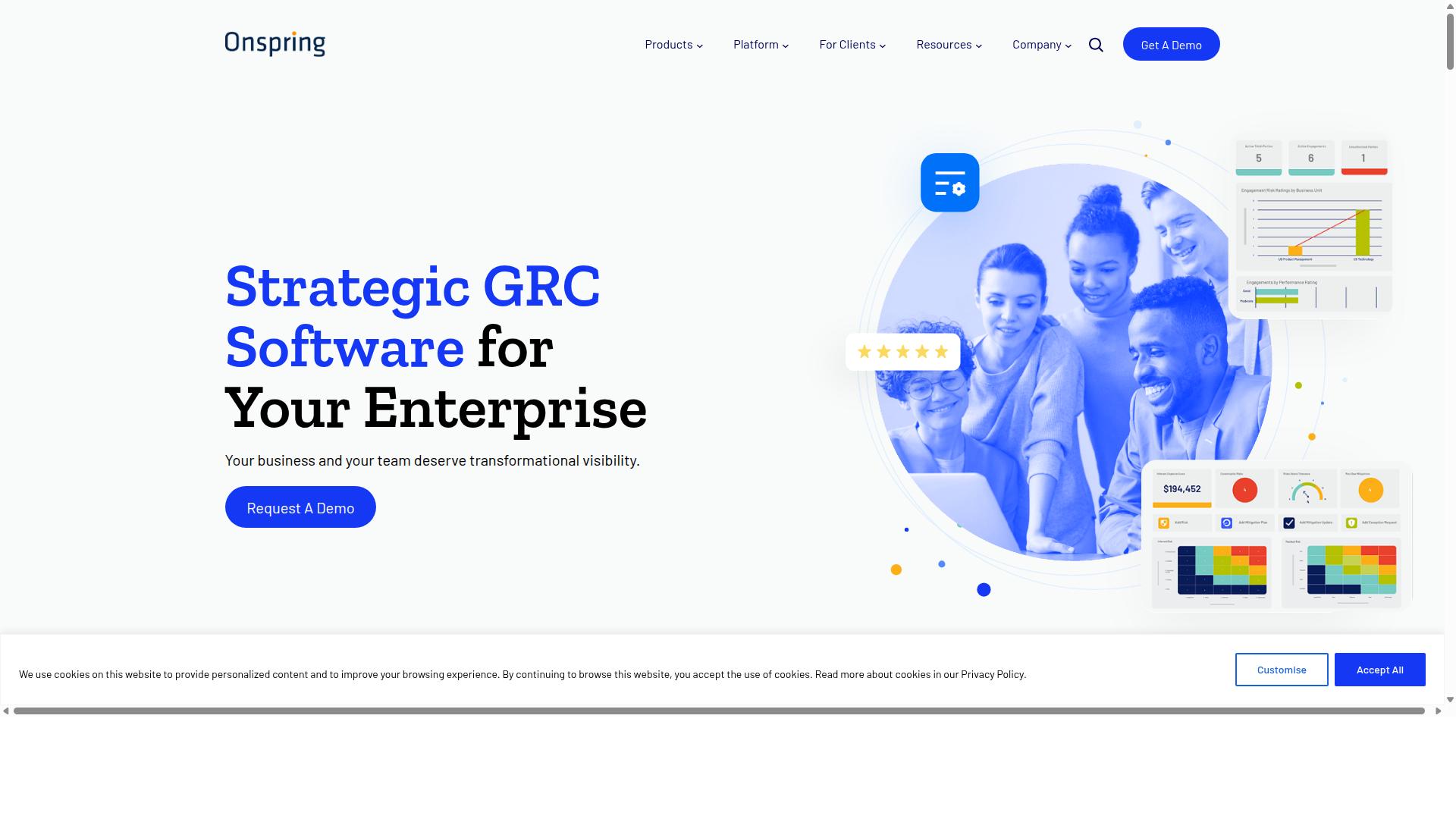
Onspring delivers governance, risk, and compliance automation through configurable workflow and reporting tools.
Organizations use this platform to establish policy management processes that align with regulatory requirements. The system supports structured approaches to document handling and task coordination across departments.
Teams can map out policy lifecycle stages from initial drafting through final approval and distribution. This creates consistency in how policies move through different organizational levels.
Built-in capabilities allow users to define business rules that trigger specific actions based on policy status or content changes. These automated responses help maintain compliance standards without manual oversight.
Key Features for Policy Management
Onspring offers policy workflow automation with integrated compliance tracking and reporting capabilities.
The platform includes policy creation workflows that guide documents through review stages with assigned responsibilities. Users can establish approval chains that reflect organizational hierarchy and expertise requirements.
Compliance monitoring dashboards provide visibility into policy status across different business units. These views help identify gaps in coverage or policies requiring updates due to regulatory changes.
Approval process automation handles routine routing decisions based on policy type, department, or risk level. This reduces delays that occur when documents wait for manual task assignment.
Version control features maintain records of policy revisions with clear attribution to specific changes. Audit trail documentation supports regulatory reviews by preserving the complete history of policy development.
Limitations and Considerations
Onspring implementation may involve extended configuration periods depending on organizational policy complexity.
Initial setup requires careful planning of process mapping to match existing approval structures and departmental responsibilities. Organizations may need several weeks to establish these foundational configurations.
Customization options vary based on specific policy requirements and regulatory frameworks. Some organizations find that standard templates need significant modification to align with unique compliance needs.
Ongoing maintenance involves regular updates to user permissions and access controls as staff changes occur. Teams must also review automated workflows when policy requirements or regulatory standards evolve.
Training requirements depend on the complexity of configured processes and the number of users involved in policy management activities. Organizations should budget time for staff familiarization with the system's reporting dashboard features.
How to Choose the Right Option
Selection criteria should align with specific operational requirements, team structures, and regulatory obligations across different industries. Decision makers must evaluate their current workflows before committing to any automation platform.
Operations managers and compliance officers face different challenges when implementing policy management systems. Team size assessment determines which features matter most for daily operations.
Smaller teams with 5 to 50 users need solutions that scale without overwhelming complexity. Larger organizations require enterprise-grade controls and support structures from day one.
Regulatory requirement matching forms another critical evaluation point. Financial services companies must address SOX compliance while healthcare organizations focus on FDA requirements. ISO standards apply across multiple industries seeking quality management certification.
Each regulation demands specific documentation standards and audit capabilities. Platforms must support the compliance frameworks relevant to your industry sector.
Integration complexity evaluation requires mapping existing systems against new workflow automation capabilities. Finance teams often use established accounting platforms while HR directors manage separate employee management tools. IT security personnel need to verify compatibility across all connected applications.
Budget allocation varies significantly between startup and enterprise pricing tiers. Most organizations begin with core policy management features and expand capabilities as adoption increases.
Data residency requirements differ by region and industry. European operations may need data storage within specific geographic boundaries while other regions have different regulatory standards.
Process Street serves teams across operations, compliance, human resources, and finance functions. The platform supports industries including financial services, healthcare, manufacturing, and professional services through customizable workflow automation.
Common use cases include employee onboarding, client onboarding, ISO compliance procedures, and document control processes. Organizations can build approval workflows and policy lifecycle management systems that match their specific requirements.
Final Verdict
Process Street demonstrates measurable advantages in policy automation efficiency and compliance standardization across 3,000+ organizations. The platform delivers documented performance improvements that directly impact policy management outcomes.
Process Street users report 30% faster documentation creation and a 75% reduction in setup time according to IMCD UK data. These metrics reflect real efficiency gains in policy lifecycle management and document approval processes.
49k+ employees standardized through onboarding workflows shows the platform's scale for policy distribution and governance framework implementation. Nearly 1m+ users across global deployments demonstrates broad adoption for enterprise policy management requirements.
Process Street maintains SOC 2 Type II certification and ISO 27001 compliance for security standards in policy automation environments. The platform offers HIPAA compliance with BAA availability, GDPR compliance, CCPA compliance, and AWS CIS compliance for regulatory requirements.
Data security protocols ensure user information never trains AI models, addressing enterprise concerns about policy content protection. Support response averages five minutes with a 98% customer satisfaction rating for workflow automation assistance.
Process Street appears on AWS Marketplace for cloud deployment options and serves organizations requiring certified workflow automation tools for policy management across multiple compliance frameworks.
Recommended Resources: